



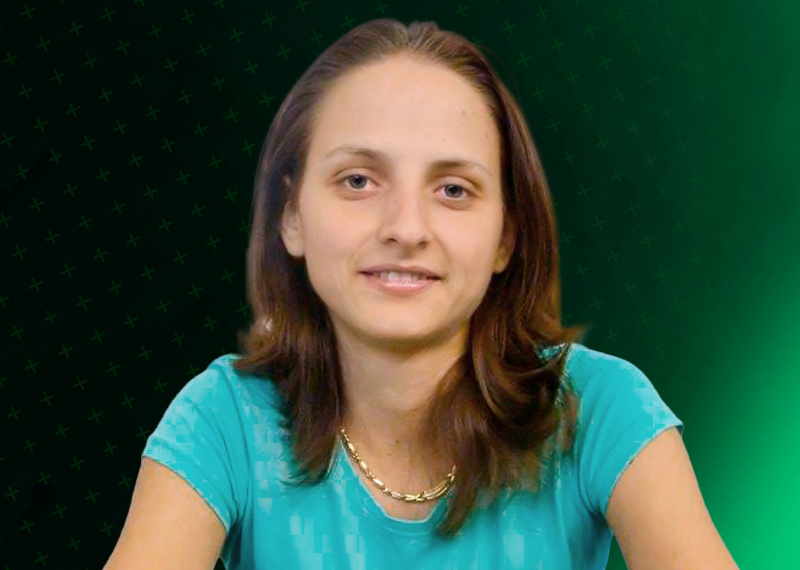
In a game historically dominated by men, WGM Adriana Nikolova stands out – not only as a competitor but also as one of the most dedicated female coaches. An experienced Olympian, Adriana claimed the Bulgarian Women’s Championship title in all formats (classic, fast and blitz) in 2011. Previously, her peak ranking of 2389 earned her a place in the top 100 female players in the world.
While his career as a player is impressive and his work as a streamer continues to grow, it is his work as a chess coach that is his true calling. In 2017, Adriana lived for a year in Dubai to work as a full-time trainer. Since then, he has accumulated years of experience and 300+ students teaching worldwide; Adriana’s influence extends beyond the tournament space.
“I would be happier if I was given support and knowledge rather than playing alone in tournaments,” admitted Adriana.
In this interview, the Plovid-based player shares basic advice:
What is your chess training philosophy?
If you work hard, you deserve to win. Don’t ever give up; there is always hope, and you just need to look for opportunities and fight until the end. I’ve had many students rush out when they just lost a pawn, and after working with me, they realized that sometimes having a queen isn’t enough to win the game if you’re not right.
Suppose a player only has 3 hours a week to practice chess. How should they spend their time?
My students’ job is to follow my recommendations, improve their speed/blitz rating, solve puzzles, and do their homework. They should play quick games regularly to have enough material to analyze, and study opening questions and read books in their free time.
If you only have 3 hours, then you can invest it
1. Puzzle Rush
2. Ranked puzzles
3. Some quick play
4. Two quick games

What are the biggest improvement factors for players under 1200 (Chess.com)? Under 2000?
Under 1200 – they have to solve a hundred puzzles per week to avoid mistakes.
Under 2000 – they need to start paying attention to newer stuff or simply update their opening repertoire.
What is your preferred way to improve your skills at opening? What chess opening approaches are you trying to teach your students?
Personally, I have extensive experience in openings simply because now I am more of a coach than a chess player. I prepare my students with the vacancies they need, not the vacancies I know well. When I decide to choose a new opening, I first try to check the top 100 games in the database of top GM players who played well; secondly, I follow deep theoretical knowledge; and third, before the OTB game, I like to have about 100 online blitz games to test whether the results are good and whether I understand the variations well. Chess openings should be chosen depending on the chess style on the player’s board. Plus, if they’re already getting good results with some vacancies, we can simply update them, rather than start a new one and leave them confused. Depends on the level too… for example, never give beginners the biggest openings like Sicily or Ruy Lopez, of course.
What is your preferred way to improve at the end of the game?
Chess.com has excellent chess drills. I also worked with my students on Dvoretsky’s Endgame Manual. I also like 1000 Endgame Studies because you develop your creativity in the middle of the practice, and you realize how unique chess is. This is ART. And lastly, I am also a fan of Averbakh’s books.
Is there anything else you would like to say to ambitious chess developers?
Last but not least is physical health. When you’re in good shape, of course you’ll play a six-hour game better. So don’t forget that movement is LIFE. I like reading business books that develop my creativity and always give me new ideas for playing chess or just inspire me with their stories. The Life of Mr. Buffett didn’t have it easy when he was young, so everyone has to work hard to win, to get better results, sweat in the gym, and look attractive in front of the mirror. Every morning say “Thank you” that you are here, that today you can play 10 games of chess and enjoy your life! Of course, for more ambitious chess players, the advice should also include more hours of daily chess work—without breaks. Thousands of puzzles, high level of preparation in the opening, good physical condition, and always after a fall—think NEXT game!
Pawn Endgame for Beginners
WGM Adriana Nikolova has published a well-received course on Chessable: Pawn Endgames for Beginners.
Available in English and German, this course guides you step by step through basic techniques in pawn positions, covering important concepts such as king activation, opposition, passed pieces, etc. Let me see!
News
Berita Teknologi
Berita Olahraga
Sports news
sports
Motivation
football prediction
technology
Berita Technologi
Berita Terkini
Tempat Wisata
News Flash
Football
Gaming
Game News
Gamers
Jasa Artikel
Jasa Backlink
Agen234
Agen234
Agen234
Resep
Cek Ongkir Cargo
Download Film
Originally posted 2026-01-09 06:53:55.