





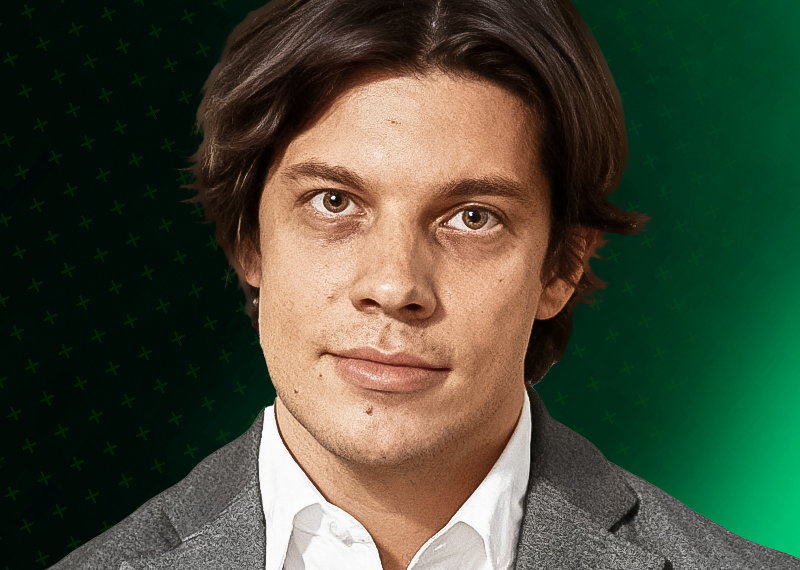
Viktor Neustroev’s journey in chess began long before he became a coach. It started in his hometown of Novosibirsk, Russia. He is one of the best junior players in his area. But it wasn’t until 2013, when her daughter Alisa was just four years old, that she discovered her passion for teaching.
Neustroev was training a small group of young children and had brought Alisa with him. Initially, he was just observing. However, before long, she became one of his strongest students. At the age of eight, she had won the Siberian Under-9 Girls Championship, a highly competitive regional title.
Since then, Neustroev has trained students of all ages and levels, cultivating skills and a love of the game. The achievements of the students are extraordinary: sisters in Hong Kong took the national U9 title, young British players represented England at the 2025 FIDE World Schools Team Championships, and many others achieved special achievements. For him, coaching is not just about winning and titles; it’s about helping players set goals, develop healthy habits, and experience the joy of overall improvement.
Now living in Buenos Aires, Viktor has taken his teaching to a global level as a content creator, sharing his knowledge with chess fans across the continent. And as the author of Chessable, he brings the same insight and attention to his courses as he does to his long-term students.
In this interview, he shares useful advice for chess players:
What is your chess training philosophy?
My coaching philosophy rests on two pillars: excitement and individualization. First, students must truly enjoy learning and playing—curiosity and fun will drive progress. Second, each player requires a customized approach.
I conduct workshops, group lessons, and create recorded video courses to cover universal basics. But before I start with each student, I study their recent games to identify strengths and weaknesses. From there, I create a personalized training plan—then refine it periodically based on new games and measurable progress.
Enjoying the process is important. Many players want to improve but are hesitant to compete for fear of losing ratings. That’s a common trap. I encourage students to play, take risks, and treat results as feedback: play games, accept changes in assessments, and draw appropriate conclusions. Improvement occurs when we combine consistent practice with honest game analysis and a positive, growth-oriented mindset.

Suppose a player only has 3 hours a week to practice chess. How should they spend their time?
With only 3 hours per week, focus on the highest impact activities:
1 hour — Tactics.
Do puzzles that suit your judgment, not random ones. Each will take ~3–10 minutes. Arrange them based on tactical motives so that you learn to recognize the tactical features of a position, rather than simply calculating them. I illustrate this concept in my course Train Your Tactical Vision.
1 hour — Play 1-2 serious games.
Avoid bullets/flash. Choose a longer time control (at least 15+10) so you can think through candidate movement, planning and time management well. Your brain must work at full capacity. This is how chess players get better.
1 hour — Analyze your game.
Start without engine. Identify critical moments, where things go wrong. Suggest better moves and count them. Once the entire game is analyzed, then check with the machine to confirm or correct your conclusions. Use a database or game model if necessary.
What are the biggest improvement factors for players under 1200 (Chess.com)? Under 2000?
Players under 1200 should definitely work on tactics more, trying to improve their calculation skills. Should they learn the basic principles—part development, centralized control, and planning? Yes, of course, but it’s even more important to focus on their decision-making process: how to find which candidate to vote for, what to expect from their opponents, and how to evaluate possible positions to choose the right candidate.
Meanwhile, for players under 2000, the overall study approach must be different. Of course, at any level, a chess player must constantly practice his tactics. However, this is where open knowledge and game planning play an important role. To improve the latter, I recommend analyzing the games GMs play in your opening repertoire. This is how you can find the general plan; then, once you reach a similar position in your game, you will most likely remember some general plans, so your task is to choose the one that best suits your position.

What is your preferred way to improve your skills at opening? What chess opening approaches are you trying to teach your students?
Work with a coach or study a structured online course. Just memorizing the movements is not enough. Instead, I explain the logic behind the moves: the main goal, what each piece does, and what is expected from the opponent. Remembering even part of this logic creates an “anchor” in memory, so that if students forget the exact sequence of moves, they still recognize key positions and can reconstruct the correct sequence.
What is your preferred way to improve at the end of the game?
Studying the main theoretical positions is a must. However, the ultimate goal is all about planning and calculations. What helped me personally was working with a master: we established positions from a book, played them twice (once as White and once as Black), and then compared our play to a model play to understand why our plan failed.
With my students, we usually analyze typical endgames—and we also study their own endgames from recent games. Recently, I held a series of group lessons devoted to endgame techniques. I focused on general ideas and concepts across a wide balance of material, and this seemed to help: some students shared games that showed real progress in the final stages. Their game became more focused.

Is there anything else you would like to say to ambitious chess developers?
My overall advice is to have a training plan. Follow this plan and adjust it regularly. How to make such a plan? Analyze the difficulties you are experiencing: are there opennesses, miscalculations, or wrong plans? If you can’t do it yourself, ask a trainer. And, of course, consistently improve your numeracy skills.
Chess Course by FM Viktor Neustroev
To date, Neustroev has created six courses, with half focusing on openings and the other half on tactics and calculation skills.
Check out the author page!
News
Berita Teknologi
Berita Olahraga
Sports news
sports
Motivation
football prediction
technology
Berita Technologi
Berita Terkini
Tempat Wisata
News Flash
Football
Gaming
Game News
Gamers
Jasa Artikel
Jasa Backlink
Agen234
Agen234
Agen234
Resep
Cek Ongkir Cargo
Download Film
Originally posted 2025-12-04 05:55:52.